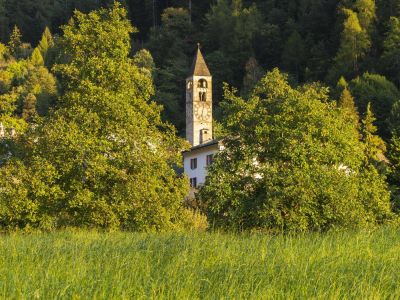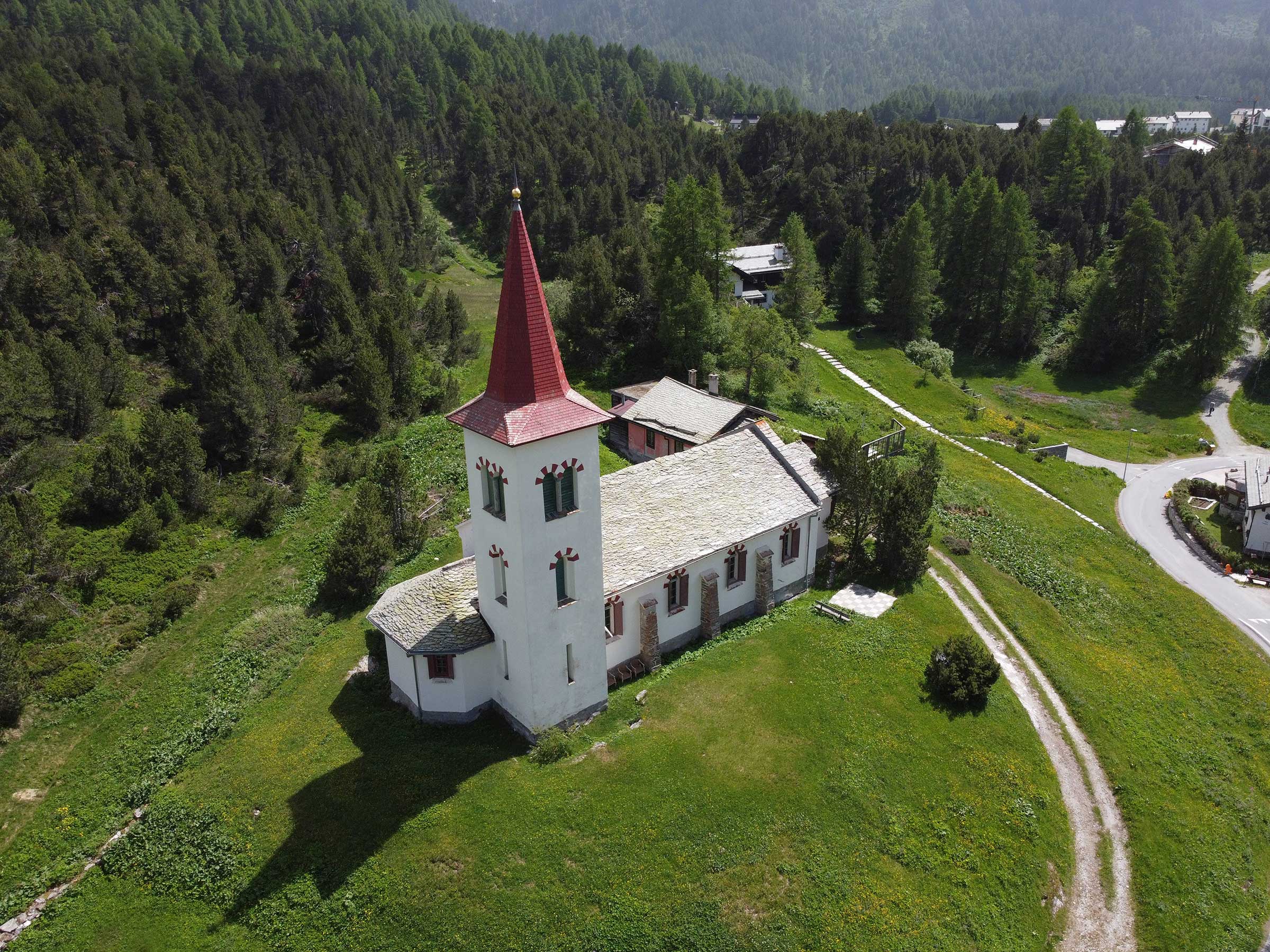
Count de Renesse had the church built in 1884 according to the design of the famous Belgian architect Jules Rauh.
Construction began on June 16, 1884 and by September 16 of the same year the church had already been completed. Countess de Renesse then gave it to the Kursaal Hotel. It was then given to the Anglican community and in 1967 became the Catholic church of Maloja. When the new church of Maloja was inaugurated, the old church of San Gaudenz - as it was officially called - was deconsecrated.
It is now called Chiesa Bianca. It was restored thanks to a private initiative and is now a meeting place that hosts a variety of performances: concerts, book presentations, parties and celebrations. In the pretty little church were also celebrated weddings and baptisms. Next to the church is installed in summer a chessboard and every game, played here, in the middle of the enchanting landscape, is a wonderful pleasure.
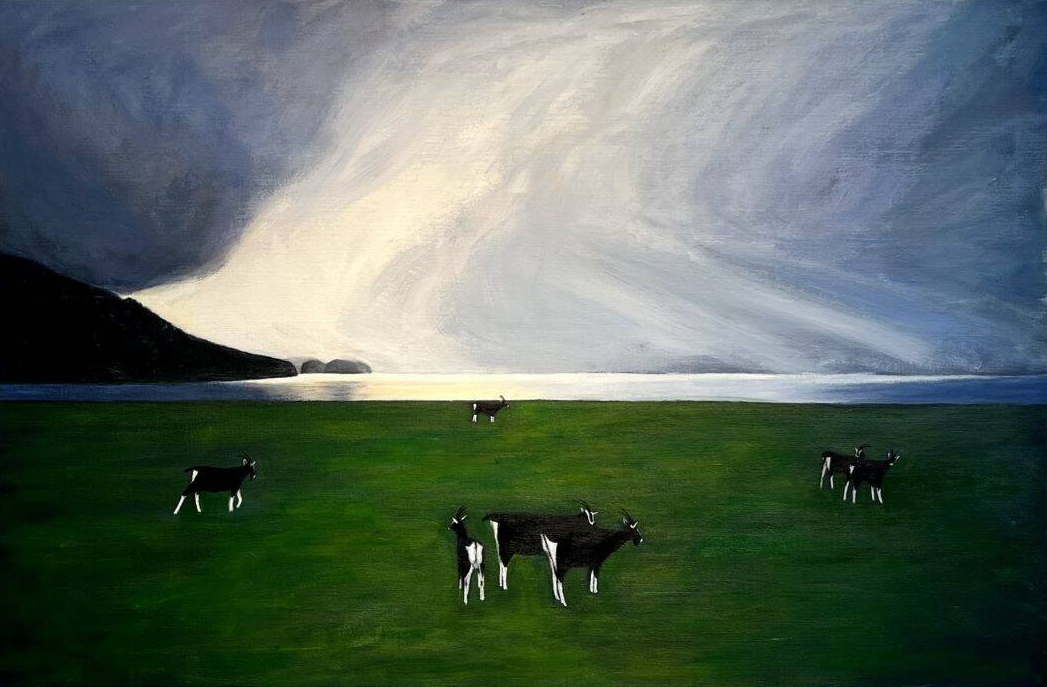
Special exhibition Giovanni Segantini und das Licht,
Special exhibition Giovanni Segantini und das Licht, from 27 June to 23 July 2025; Giovanni Segantini und die Tiere, from 3 to 28 August 2025, every day except Wednesday, from 2 p.m. to 6 p.m.
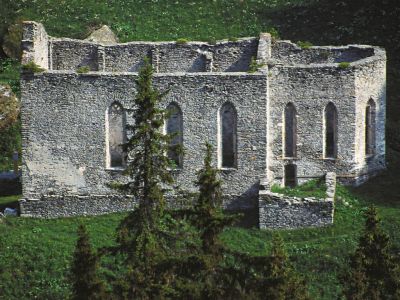
Bregaglia Valley has many lovely hidden corners and is worth even a brief visit.Bregaglia Valley has a variety of ruins, churches, quaint villages and many hidden corners well worth a visit. The ruins of San Gaudenzio, the Pretorio and "Lan Muraia," are just a few of the cultural highlights worth seeing. There is much to explore and discover in Bregaglia.
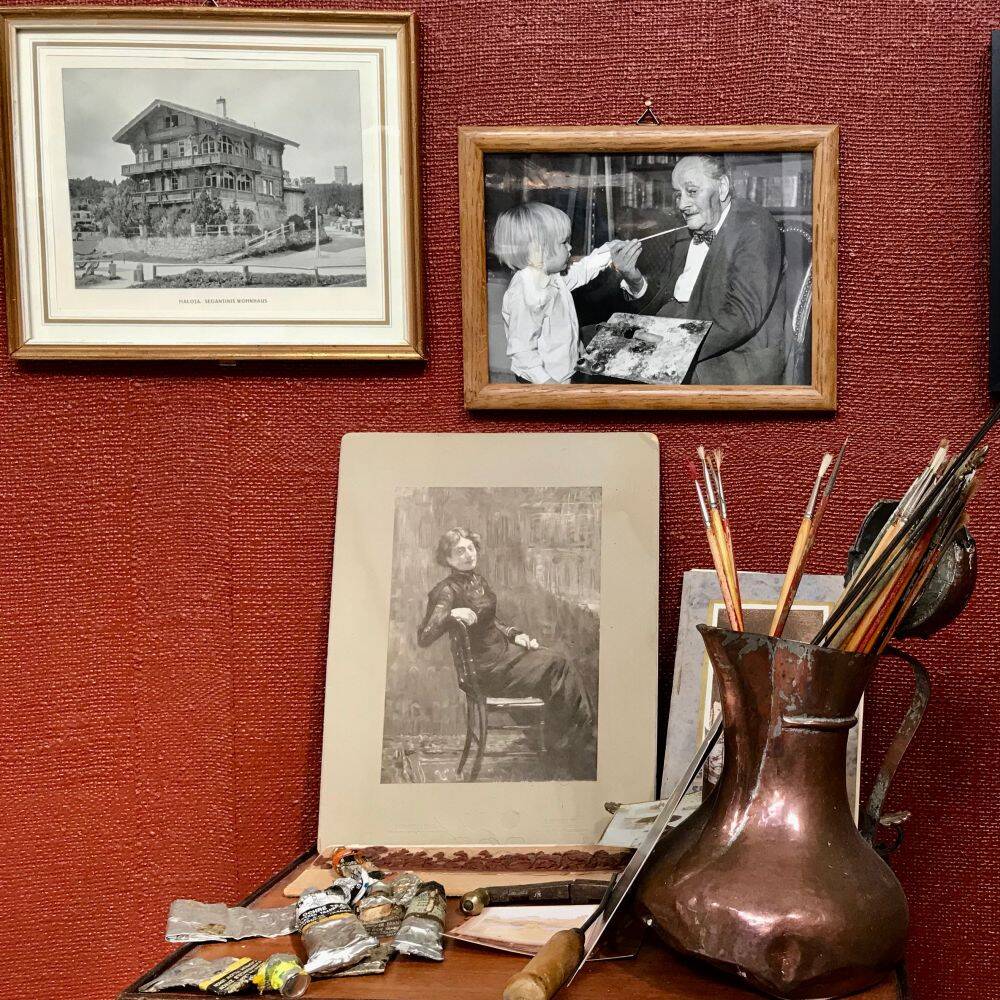
After 1906, a small barn in the heart of Stampa was converted into Giovanni Giacometti’s studio. In this room, his children as well as his wife Annetta often posed as models for the painter. After Giovanni’s death in 1933, his famous son, Alberto, used the small atelier. He regularly visited his home-valley and his mother during the summer months. Even today, you can still see traces of the two artists in the room.
Atelier Visits Every Sunday, from 31 May to 20 October 2025, at 3.00 pm Every Thursday, from 15 July to 31 August 2025, at 3.00 pm
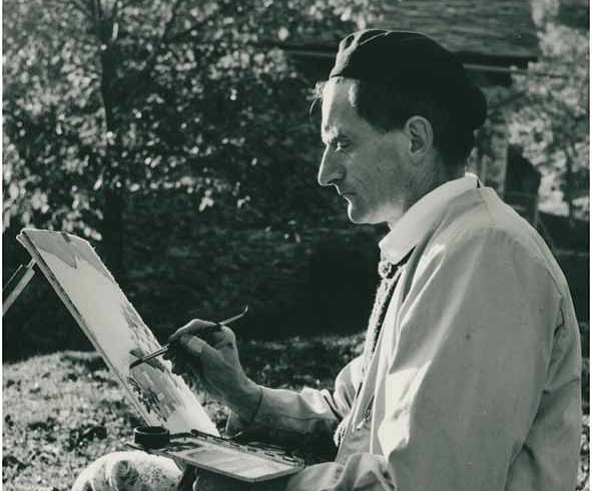
Vitale Ganzoni (1915 – 1990), was the founder of the valley museum, Ciäsa Granda. However, foremost, the Bregaglia elementary school teacher was an artist. In a permanent exhibition in Maloja, you can immerse yourself in his work.
Location Casa Al Larasc, Maloja Open upon request; contact Ms. Ursina Negrini www.vitale-ganzoni.ch
Bruno Ritter was born in 1951, in Cham in canton Zug. In 1982, he moved to Canete in Valchiavenna and then, in 1994, he moved to Bregaglia.
At first, he lived in Maloja and later he moved to Borgonovo, where he currently resides. At the beginning, his artistic works were greatly influenced by the surrounding mouintains. His artistic creativity is not only limited to the threatening and mysterious shadows of the mountains. He also paints local people and conveys the atmosphere of the area in his works. Some of his works can be seen on his website.
His atelier is located in the "Castello" in Chiavenna. It is possible to visit his atelier from Monday-Friday by appointment only. Please inquire at least one day in advance.
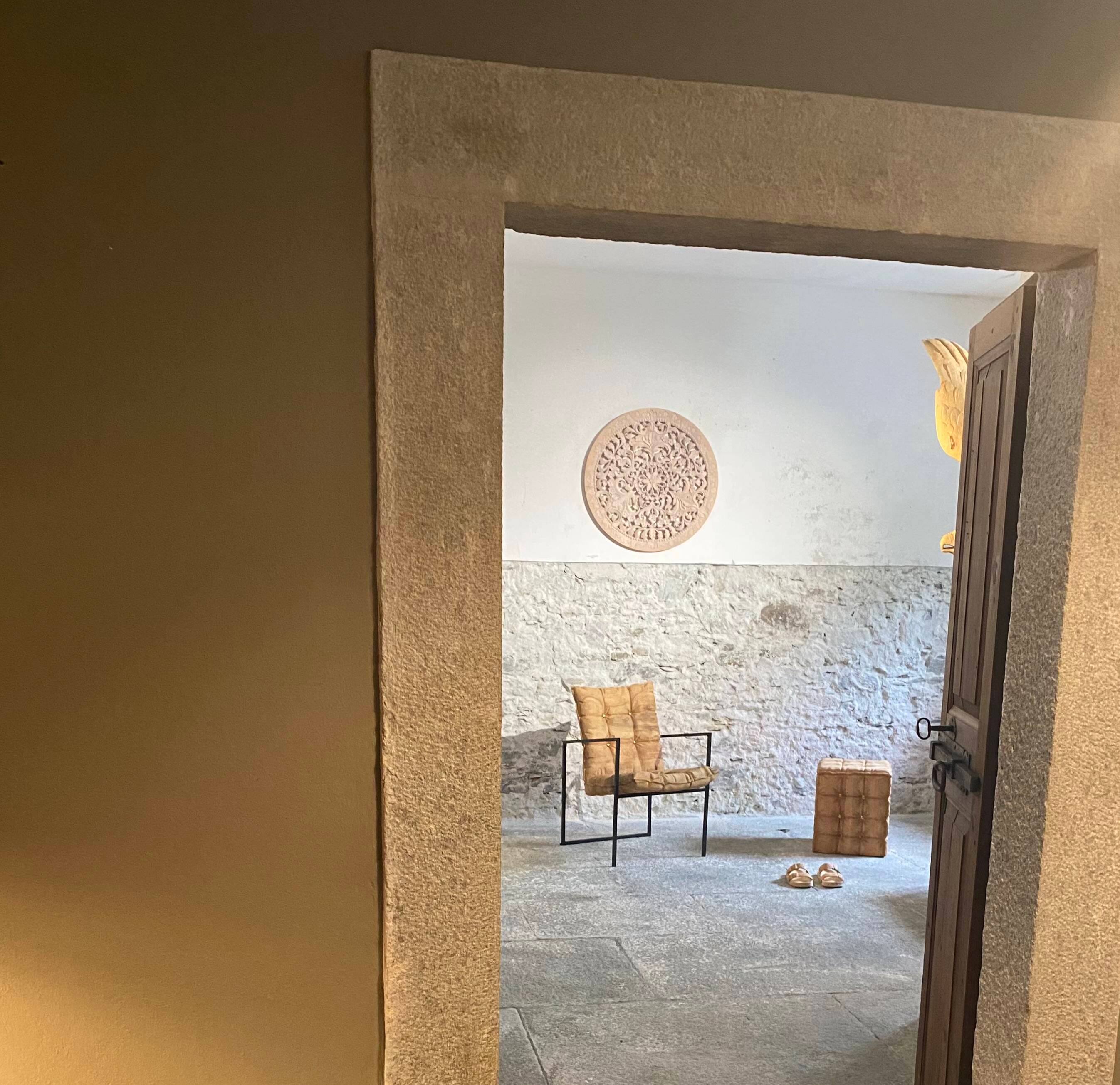
Il Bed and Breakfast Pontisella a Stampa ha iniziato la sua attività durante l’estate 2018. Le stanze di una vecchia casa patriziale della Bregaglia sono state rinfrescate, rivitalizzate con nuove idee architettoniche e arredate con interessanti pezzi di design.
Come centro culturale la casa Pontisella insegue la filosofia dell’uso responsabile delle risorse e la responsabilità sociale ed ecologica, valori molto importanti. Fedeli a questo pensiero essi richiamano l’attenzione all’artigianato e alle specialità culinarie della Val Bregaglia.
Butéga Pontisella Vendita di manufatti, specialità culinarie e design contemporaneo della Valle e della regione alpina, in collaborazione con OKRO Design & Handwerk, Coira.
Orari di apertura Butéga aperta durante l'estate, di venerdì, sabato e domenica, dalle ore 16.00 alle 18.00
On top of the hill near Maloja stands the Belvedere Tower.
From the summit you can enjoy a breathtaking 360 ° view. Despite its medieval appearence the building dates back to 1882. The castle was built as a personal residence by the eccentric Belgian Count Camille de Renesse who at the end of the nineteenth century dreamed of transforming Maloja into a popular tourist destination for wealthy aristocrats. The tower and the adjacent hotel, however, were only completed after the count's death, at the beginning of the twentieth century.In 1953 the castle was bought by the Federal Nature Conservation Society. The hotel is now in ruins, while the tower has become the emblem of Maloja. In the summer, the Belvedere Tower has several exhibitions and you can visit the permanent Pro Natura exhibition entitled, "The history of the Maloja landscape: geology, flora and fauna."
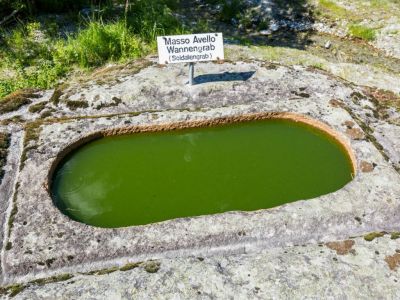
There have been 36 glacial mills discovered in the the nature reserve that surrounds the tower.
Summer exhibition Exhibition "Alpine diversity – experience biodiversity at the Belvedere Tower"
Access The Belvedere Tower is open daily from mid-June to mid-October, from 10 a.m. to 7 p.m. The tower is closed in winter.
Admission CHF 5 (voluntary)
Infrastructure
There is a Kompotoi-toilet near the tower. The tower and the nature reserve are not wheelchair accessible.